If you asked me what the best image model is right now, I’d immediately say Gemini Nano Banana Pro. It’s powerful, fast, and incredibly accurate. But even with the strongest model, every AI creator faces the same challenge: keeping characters consistent.
Whether you’re creating comics, story panels, or AI-generated videos, your character needs to look identical in every scene—same face, same hair, same proportions, same overall style. Maintaining that consistency sounds simple, but in reality, it’s one of the hardest parts of AI image generation. You can write a perfect prompt once, only for the next image to come out with slightly different features. That’s where most models struggle.
In this guide, I’ll walk you step-by-step through how to solve this using Gemini Nano Banana Pro, and how to keep your characters perfectly consistent across every shot.
Learning how to create consistent characters with Gemini Nano Banana Pro is one of the most valuable skills for any AI artist or storyteller. This tutorial will show you how to build reliable reference images, write detailed prompts, and preserve identical character identity across every pose, environment, and scene using Google’s advanced image model.
How to create consistent characters using Gemini Nano Banana Pro is one of the most valuable skills for any AI artist or storyteller. This guide shows you exactly how to build reference images, structure detailed prompts, and maintain perfect character identity across every pose, scene, and environment using Google’s Gemini Nano Banana Pro model.
Build Your Character Foundation
The key to achieving consistent results is starting with a strong, well-made reference image. Think of this reference as your character’s DNA—every future image you generate will depend on it.
Here’s how to create it the right way:
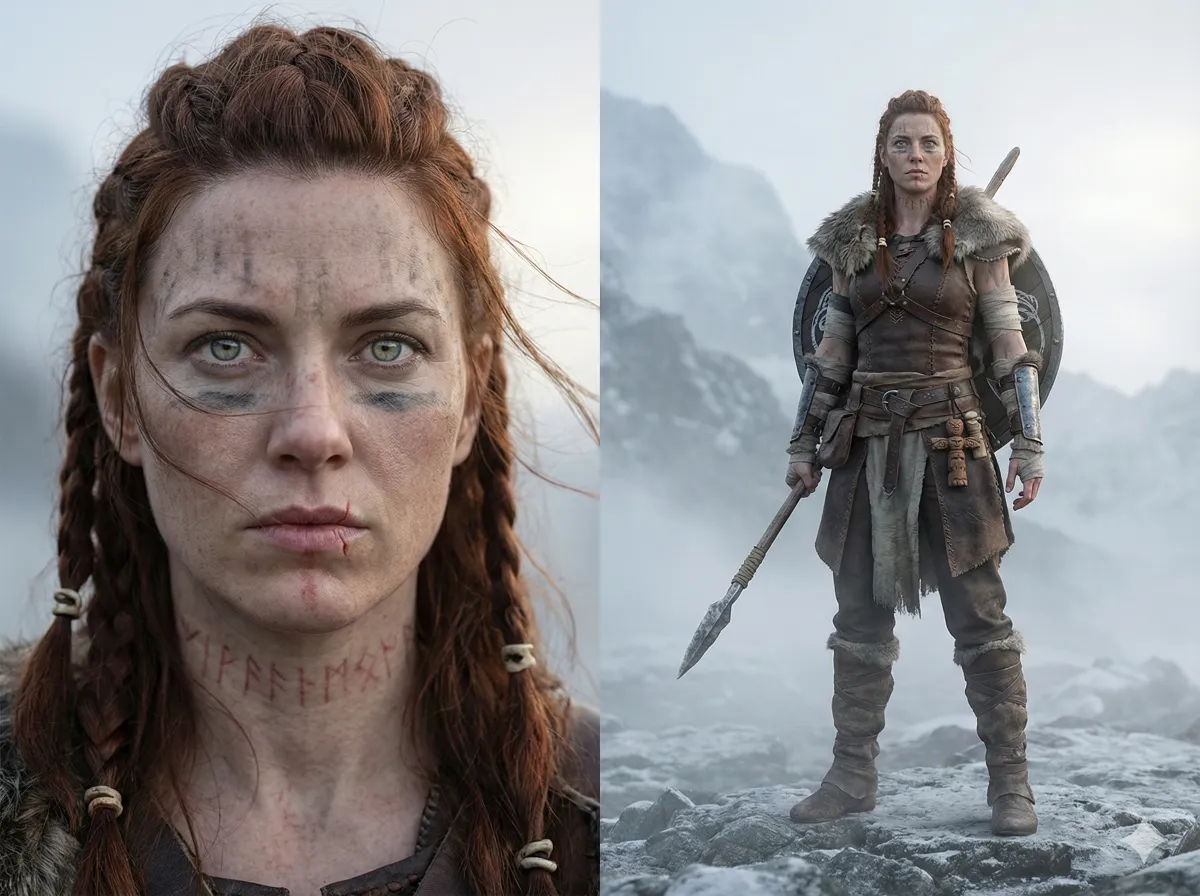
Use Gemini Nano Banana Pro to generate a side-by-side reference image: a close-up portrait on the left and a full-body shot on the right. Both panels should show the exact same character in the same style.
Why this setup? Because it captures everything the AI needs—facial details, proportions, outfit, hair, and full character design—all in one frame. When you upload this combined reference later, the model reads the entire character at once, giving you far more accurate and consistent results in all your future images.
The Prompt Template
This is the exact template I use for every character I create. Fill in the bracketed sections with your specific details.
“Create side by side composition showing a close up portrait on the left and a full body view on the right of [character description], set in [setting or theme]. The character has [face details], [hair style and color], and [eye details]. Their skin shows [unique surface, marks, textures, or features]. Add signature design elements such as [tattoos, paint, glow, cyber markings, scars, ornaments].
On the left, the camera captures a close up portrait. Expression: [describe expression]. Eyes [describe look or focus]. Facial details clearly visible such as [pores, freckles, pigmentation, microtextures, reflections, etc].
On the right, the camera frames the full body design. Outfit: [materials, cuts, style, colors]. Accessories: [items]. Footwear and posture: [describe]. Body language should suggest [emotion or role].
Background: [describe background]. Lighting: [type of light, direction, mood], ensuring depth and realistic shadows. Overall style captured as [photography style or render quality].
Aspect ratio 4:3.”
Let me break down why each part matters.
- Character description: Be specific. Don’t just say “warrior.” Say “battle worn female warrior from an ancient mountain tribe.” The more specific you are, the more unique and memorable your character becomes.
- Face details: This is critical. Describe the bone structure, the shape of features. Sharp cheekbones, a strong jawline, a soft rounded face. These details define your character’s identity.
- Hair and eyes: Color alone isn’t enough. Describe the style, the texture, how it moves. “Braided dark copper hair tied with small bone rings” gives the AI so much more to work with than “brown hair.”
- Skin details: This is where your character becomes real. Freckles, scars, ritual markings, weathered texture. These small details make a massive difference in consistency.
- Signature design elements: Think of these as your character’s fingerprint. Unique markings, tattoos, or features that appear in every image. They’re consistency anchors.
- Expression and body language: These show personality. A firm, alert expression tells a different story than a warm smile. The AI needs this context.
- Lighting and style: Consistent lighting style helps maintain the same visual quality across all your images.
Real Example: Create a Warrior Character
Here’s a practical example that follows this template perfectly. I’ll share the full prompt first, then break down why it works.
“Create side by side composition showing a close up portrait on the left and a full body view on the right of a battle worn female warrior from an ancient mountain tribe, set in a cold misty highland. The character has sharp cheekbones, braided dark copper hair tied with small bone rings, and piercing pale green eyes. Her skin shows weathered tone, light freckles, and faded ritual markings drawn with natural pigments. Add signature design elements such as thin charcoal war paint under the eyes, faint red ceremonial runes across her neck and shoulders, and a small scar at the lower lip.
On the left, the camera captures a close up portrait. Expression: firm and alert. Eyes focused straight ahead as if watching an enemy from a distance. Facial details clearly visible such as fine skin texture, pores, light moisture on the lips, reflection in the eyes, and strands of hair lifting in the wind.
On the right, the camera frames the full body design. Outfit: layered leather armor with stitched segments, a fur lined shoulder mantle, weatherproof linen wraps around the arms, and a leather belt holding small carved totems. Accessories: iron wrist guards, a circular shield with engraved patterns strapped to her back, and a stone tipped spear gripped in one hand. Footwear and posture: rugged hide boots, stance steady with legs apart. Body language should suggest readiness, discipline, and resolve.
Background: bleak rocky terrain covered in pale fog. Lighting: soft diffused daylight from the front and subtle rim illumination on the edges to bring volume and depth. Overall style captured as realistic photography with crisp clarity.
Aspect ratio 4:3.”

 19 Gemini Nano Banana Pro Prompts for Christmas
Notice how specific this gets. The scar at the lower lip, the bone rings in the hair, the war paint pattern. These aren’t random details. They’re identifiers that will help maintain consistency later.
The outfit description is equally detailed. “Layered leather armor with stitched segments” is way better than just “armor.” The AI knows exactly what to render.
I think this level of detail is enough for most projects. But if you’re working on something important, like a full comic series or a commercial project, you might want to go further.
Generate a medium shot of the character too. This gives you a mid-range reference that shows facial features clearly while including upper body details. It’s useful for dialogue scenes or character interactions.
Also consider generating a full-body back shot. This is essential if your character has distinctive features on their back, like wing tattoos, a cape, or unique armor plating.
Test Your Reference Image
Before moving on, study your reference image closely. Does your character have clear, recognizable features? The test is simple: if you showed this reference to someone and then presented 10 similar characters, could they confidently pick yours out?
If not, the design isn’t distinctive enough. Add stronger signature elements. Make the features more specific and memorable.
Apply Consistency Across Scenes
Now comes the exciting part. You’ve created your character. Now let’s put them in different situations while keeping them consistent.
The process is straightforward but powerful. Upload the character image you generated, then write prompts that place them in new scenes. The key phrase you’ll use is “featuring the same character shown in the reference image.”
This tells Nano Banana Pro to analyze your reference and maintain those exact features.
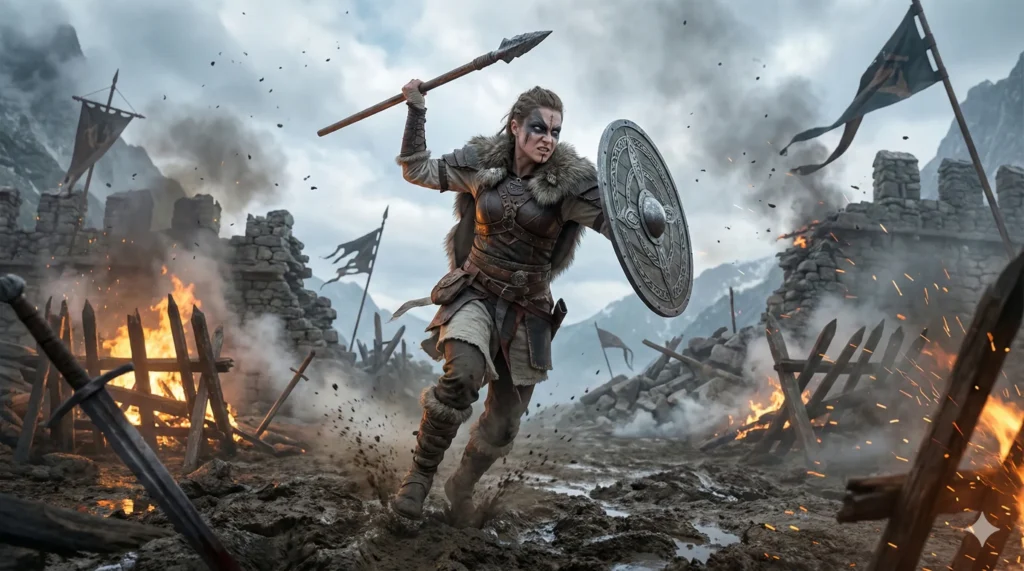
Let me show you with the warrior character. I uploaded the reference image and wanted to create an action scene. Here’s the prompt I used:
“Create an action filled war scene featuring the same character shown in the reference image. Keep all core design elements consistent.
Place the character at the center of a battlefield in the midst of a brutal mountain siege. Surroundings should show collapsed stone ramparts, burning wooden barricades, churned muddy ground, scattered broken weapons, torn banners snapping in the wind, drifting ashes, and thick smoke clouds rolling through the scene. The character is captured mid action, charging forward while raising her spear, shield lifted, posture strong and aggressive.
Lighting dramatic, shaped by firelight glow from the burning structures and diffused cold daylight from above. Show movement and atmosphere through dust trails kicked from her boots, sparks from burning wood, smoky air, flying debris, and light motion blur in the distant background.
Composition cinematic with a slightly low camera angle to amplify presence and determination. Expression fierce and unyielding, eyes narrowed toward the enemy. Keep the identity and signature design clearly recognizable from the reference, ensuring proportions, face structure, markings, outfit layers, and weapon design remain unchanged.
Aspect ratio 16:9.”
 15 Gemini Nano Banana Pro Prompts for New Year Cards
The character looks exactly like the reference. Same face structure, same copper braided hair with bone rings, same pale green eyes, same war paint pattern. Even the armor details match perfectly.
This is what consistency looks like.
Create Different Poses and Angles
One question I get all the time: how do you create the same character in completely different poses without losing consistency?
The answer is in your prompts. You need to be specific about the pose while being equally specific about maintaining the character’s identity.
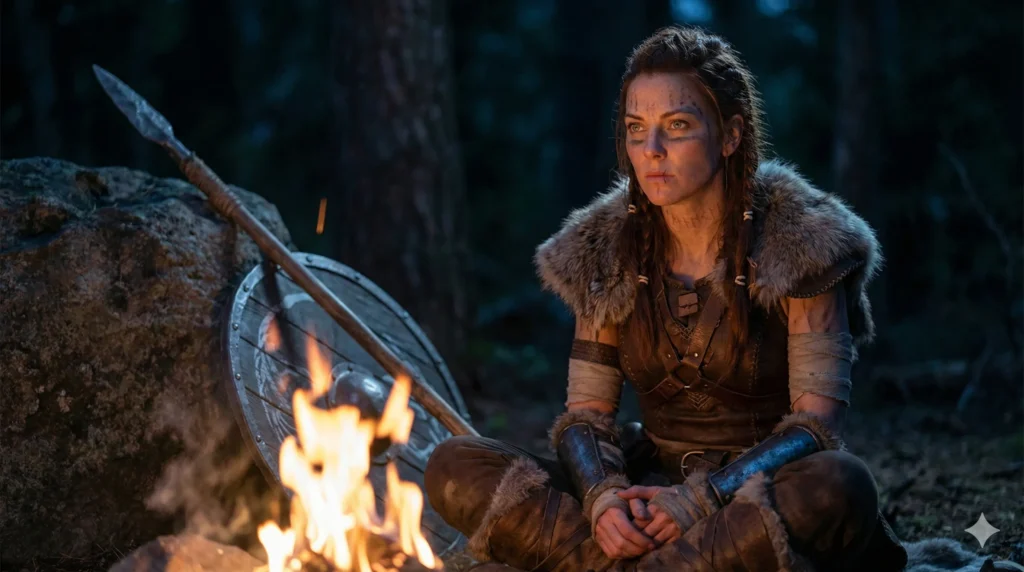
Here’s an example. Let’s say I want my warrior sitting by a campfire, relaxed instead of battle-ready.
“Create a scene featuring the same character from the reference image. The warrior sits cross-legged beside a crackling campfire at night. She’s removed her shield and spear, which lean against a nearby rock. Her posture is relaxed but still carries an air of readiness.
Expression: thoughtful, gazing into the flames. The firelight illuminates her face, showing the same facial structure, pale green eyes, copper braided hair with bone rings, war paint, and the scar on her lower lip. Her layered leather armor and fur mantle are visible, with some straps loosened after a long day.
Background: dark forest surroundings barely visible in the shadows. Lighting: warm orange firelight from below and in front, with cool blue moonlight from above creating rim lighting. Atmosphere: quiet, introspective moment. Style: realistic photography with shallow depth of field.
Aspect ratio: 16:9.”
 21 Gemini Nano Banana Pro Prompts for Holiday Photos
See how I listed the specific features again? Pale eyes, copper braided hair, war paint, the scar. This redundancy helps lock in consistency.
Edits and Variations
Here’s where things get powerful: Google Gemini Nano Banana Pro is incredibly good at editing images without breaking character consistency. You can modify almost anything—outfits, age, emotions—while keeping the same identity.
Want to change the outfit for a formal scene?
Upload the reference image and say:
“Show the same character wearing elegant ceremonial robes instead of armor, keeping all facial features and markings identical.”
Want to age them?
Try:
“Show the same character 20 years older, with slight grey hair and more weathered skin, but with the same facial structure and green eyes.”
Want a different emotion?
Use:
“Show the same character smiling genuinely, with brighter eyes, while keeping all identifying features consistent.”
The model applies these edits while preserving the core traits that define your character, ensuring continuity across every scene.
Build a Character Library
Once you get the hang of this method, you can start building a full cast of characters. The best way to stay organized is to create a reference sheet for each one.
For every character, generate:
- A side-by-side close-up and full-body image (your primary reference)
- A medium shot showing the face and upper body
- A back view to capture rear design elements
- A simple scene test to confirm consistency across environments
Save these files with clear, descriptive names.
“Character_Warrior_Reference.png” is far better than “IMG_1234.png.”
Keep notes for each character as well. What are their signature features? Which prompt phrases produce the most accurate results? Over time, this becomes your character bible—a guide you can rely on for perfect consistency.
Advanced Technique: Character Interactions
Once you’ve built multiple consistent characters, you may want them to appear together in the same scene. This is more challenging, but definitely achievable.
The key is to upload each character’s reference image and clearly identify who is who in your prompt.
For example:
“Create a scene with two characters. Character A from the first reference image (the warrior with copper hair) is facing Character B from the second reference image (the merchant with the grey beard). They are negotiating in a busy marketplace.”
It takes a bit of practice, but Nano Banana Pro handles this surprisingly well—as long as your references are solid and your instructions are precise.
Not long ago, creating consistent characters with AI felt almost impossible. You’d generate an amazing design once, and then never get the same character again.
This method changed everything. The side-by-side reference setup, combined with detailed prompts and Nano Banana Pro’s image-referencing abilities, finally makes true character consistency realistic.
Start with one character. Build a detailed reference using the template. Test them in a few scenes. Once you see how reliably the character stays consistent, you’ll understand how powerful this workflow is.
With this approach, your characters can remain consistent across every panel, every scene, and every story you create.
- 21 Gemini Nano Banana Pro Prompts for Logo Design
- 23 Gemini Nano Banana Pro Prompts for Different Cartoon Styles